Kindergarten Math Lesson Plan
An active Kindergarten geometry lesson plan using movement and “shape detective” games to master 2D shapes.

Author
Katie Wickliff

Published:
March 2026
Key takeaways
- • Students focus on understanding 2D and 3D shapes throughout their kindergarten year.
- • A kindergarten math lesson plan should have short, meaningful activities that get kids moving.
- • Kindergarten lesson plans are never “one size fits all”. Make sure to adjust for your unique learners.
Kindergarten is such an exciting time to be a student! At this age, most children are naturally curious and eager to explore new ideas, and math is no exception. In kindergarten, learning about shapes is a core piece of the curriculum. Students begin identifying, comparing, and talking about 2D and 3D shapes in concrete ways. In this lesson, kindergartners focus on four basic shapes and complete several short challenges that encourage them to be active participants in their learning. Let’s get started!
Sample Kindergarten Geometry Lesson
Lesson Objectives and Learning Goals
The learning objectives for this lesson are based on S.M.A.R.T. goal setting criteria.
Specific
Students will identify, describe, and create four basic 2D shapes (circle, square, rectangle, triangle).
Measurable
Students must correctly identify all four shapes on a shape card and count the number of sides and corners on each shape.
Students will self assess throughout the lesson and draw one object from memory or the classroom that matches each shape.
Achievable
Kindergarten students have already studied these four shapes and their attributes in other geometry lessons. This lesson will reinforce and extend their learning.
Relevant
This lesson aligns with Kindergarten Geometry Standard K.G.A.2: Identify and Describe Shapes (regardless of their orientation and size).
Time-Bound
By the end of this 30 minute lesson, students will demonstrate an understanding of four basic shapes.
Assessment
Formative assessments throughout the lesson include active participation and completing a shape drawing assignment at the end of class. The teacher will check for understanding throughout each stage of the lesson.
Materials Needed
- Large, colorful shape cards or cutouts
- Drawing paper and crayons/markers
- Tape
- Whiteboard/Chart paper
Table of contents
Strengthen your math skills with DreamBox
Kindergarten Math Resources
See how DreamBox can help your kindergartener with math.
Lesson Procedure
Hook/Introduction
Begin with a quick, active review of four basic shapes through “Musical Shapes”. In this game, play music and have students dance around the room. When you stop the music, call out the name of a shape. Students must freeze into that shape using their bodies. This does not have to be perfectly accurate, but pay attention to whether students show basic understanding.
Learning Activities
Direct Instruction
To introduce the activity, tell students they are going to be “shape detectives” and practice identifying shapes using clues. Show large shape cards, name each one, and highlight their attributes:
- Circle: no corners; one continuous curved line
- Square: 4 equal sides; 4 corners
- Rectangle: 2 pairs of equal sides; 4 corners
- Triangle: 3 sides; 3 corners
Before moving on to guided practice and independent work, address any confusion. Ask questions like:
- “Which shape has no corners?”
- “Which shape has 3 sides?”
- “True or false? A square has 4 equal sides.”
Guided practice
Tell students that they can find shapes all over the classroom. Point out a few, such as: rug: circle, whiteboard: rectangle, desk: square. Invite students to spot other shapes around the room and raise their hands to share. Notice as many shapes as time allows.
Independent/Small Group Work
To prepare, scatter shape cards around the room. There can be several cards for each shape. Organize students into small groups and have each group form a line. Call out a shape and an action. For example:
- “Hop to a square!”
- “Crawl to a circle!”
- “Skip to a rectangle!”
Have one student from each group perform the action with others cheering them on. They must each say the name and number of sides/corners. Offer additional support or an extra challenge, if needed. Here are a few examples:
Optional Support:
- Students identify the shapes with help of their small group.
- Students identify just one attribute of the shape.
- If physical coordination is a challenge, students choose how to move to their shapes.
Optional Challenge:
- Don’t say the shape name. Instead, say “Hop to the shape with 4 equal sides!”
- Encourage students to find two shapes instead of one.
Wrap Up/Formative Assessment
Pass out individual cards to use as an exit ticket. Encourage each student to draw a picture of the shape they liked best. Students can also draw familiar objects that match each shape. Collect the index cards at the end of class.
Teacher Reflection
Asking yourself the following questions after the lesson will help you reflect and make adjustments as needed.
- Did the students seem engaged in the lesson? How do I know?
- Did the students meet the learning objectives? What evidence do I have?
- Did any students struggle during the lesson? Did any students need an extra challenge?
- Was there enough time to complete this lesson?
- Do my students need more practice with this specific skill?
If your students do need more practice with shapes, try an interactive online math program that offers an engaging way to strengthen foundational geometry skills. Students can continue practicing these important concepts while having fun!
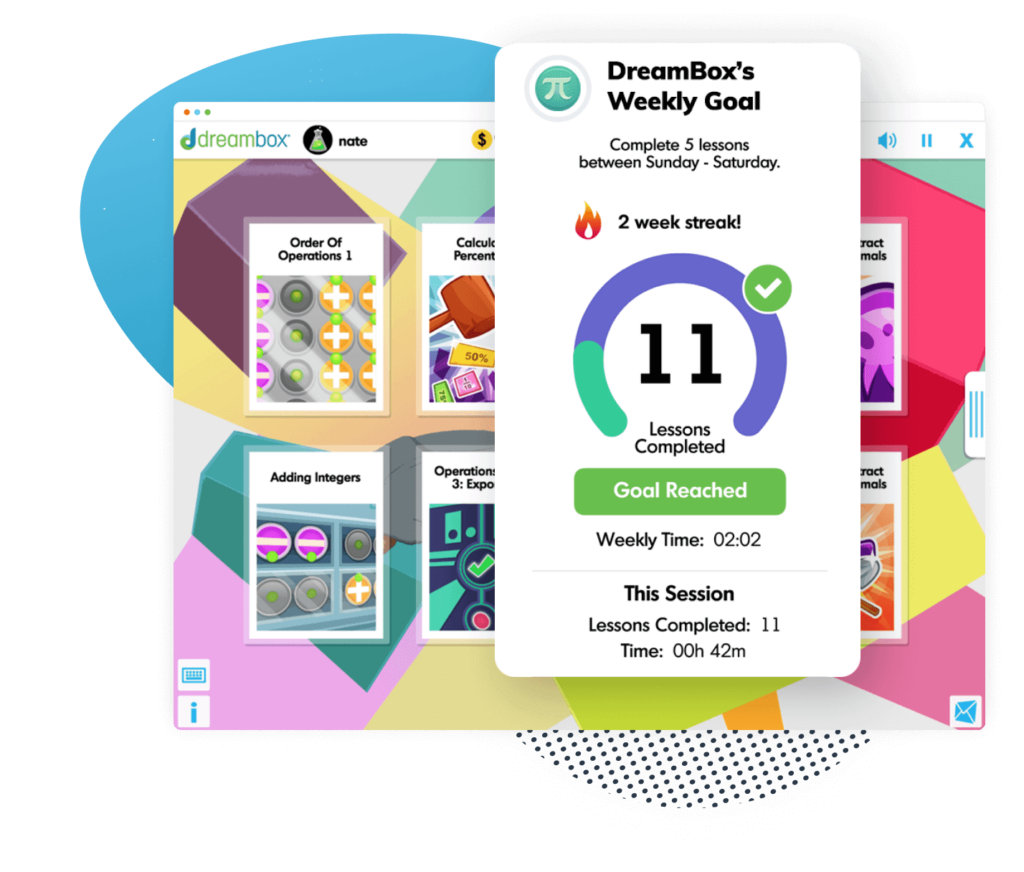
The math program that drives results
Get started today!
DreamBox adapts to your child’s level and learning needs, ensuring they are appropriately challenged and get confidence-building wins.
About the Author
Katie Wickliff
Katie holds a master’s degree in Education, has over 15 years of education experience as a primary classroom teacher, and is Orton-Gillingham certified tutor. Most importantly, Katie is the mother of two primary school students, ages 8 and 11. She is passionate about maths education and firmly believes that the right tools and support will help every student reach their full potential.