20 Classroom Math Games for Elementary Students
From number lines to math relays, these games turn key math concepts into interactive experiences.

Author
Katie Wickliff

Published:
December 2025
Key takeaways
- • Fun classroom math games encourage student engagement and motivation
- • Most math games can be adapted for different grade levels and abilities
- • Besides strengthening math skills, these games help develop critical thinking and teamwork
Math activities are a fun way for the whole class to practice important concepts while sharpening their critical thinking, abstract reasoning, and teamwork skills. We’ve curated a list of 20 of the best math activities for elementary-aged learners that cover a huge variety of math topics, like measurement, fact fluency, and basic geometry. Many of these games encourage movement, making them perfect for breaking up longer periods of sitting. We’re confident you’ll find several activities that will suit your unique learners!
Number Line Jump
Tape a large number line to the floor and have students stand behind it. Read an equation, like 7 + 3. Students jump to the 7, pause, and then jump 3 more spaces to land on 10. Students say the entire equation aloud and then head to the back of the line. This activity is really fun with subtraction, too.
Simon Says Math
Simon Says Math puts an educational twist on the classic game, and can be used with students of any age. Combine movement with math questions, such as “Simon says jump on one foot 3+4 times” or “ Simon says put your arms parallel!” This is a great way to get moving while reinforcing concepts students are learning in class.
“I Know” Cards
“I Know” cards help students with strategies to find the answers to tricky math facts. This can be used for various concepts, but works especially well with multiplication facts.
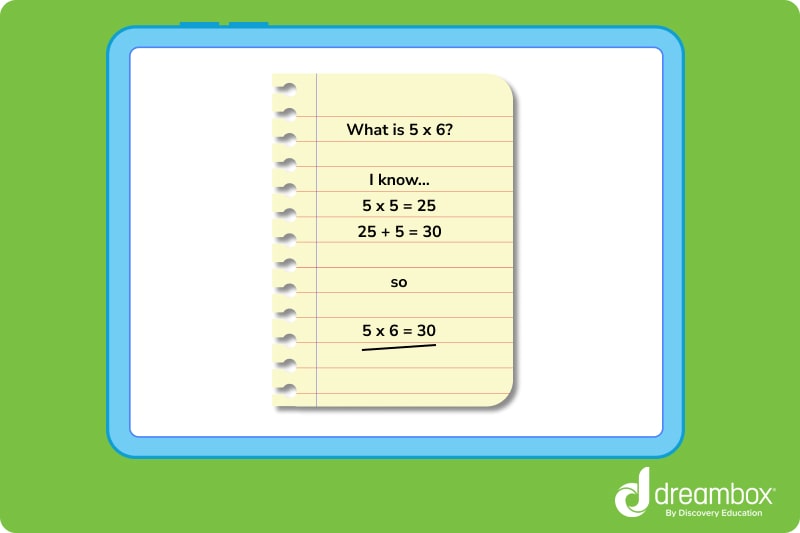
Focusing on what the student already knows helps shift their mindset away from what they don’t know.
Marshmallow Shape Building
This fun (and tasty!) activity will help make the abstract concept of shapes easier to understand. Physically manipulating the marshmallows and toothpicks helps develop spatial awareness. As a group, talk about the shapes students have already learned, or use a visual guide to help them build. Students then form shapes using marshmallows and toothpicks. After students can build 2D shapes, work on creating 3D shapes, such as cones, cubes, or pyramids.
Trivia Toss
Using a soft ball or beanbag, ask a question, toss it to the student who answers, then they toss it to someone else for the next question. This game works with any subject, but is especially fun with simple math word problems. The voluntary aspect of the game means no one is put on the spot.
“Beary” Fun Grab Bags
Many children benefit from using math manipulatives (physical objects) to practice addition and subtraction skills. For this game, place two small paper bags on a table. Choose items to use as manipulatives–my kids loved these colorful bears. Students grab a handful of objects from each bag, count them, then add up the results with a paper and pencil or a whiteboard and markers. This one can be easily adapted to suit different ability levels. As their skills progress, add more!
Math Twister
Using a traditional twister game mat, add number labels with the answers to addition, subtraction, multiplication, or division problems the students are working on. Then, instead of saying “left foot on red,” call out equations like “left foot on 6 x 5.” Students will need to find the number 30 and cover it with their left foot.
Length and Width Measurement Game
This hands-on activity uses washi tape–decorative paper tape–to measure length and width. This tape comes in lots of fun colors and patterns and can be torn and repositioned easily. Working in pairs, students lie on the floor while their partner stretches the tape as long as they are tall. Using a ruler, they measure the length in feet and inches and record it. If students aren’t ready for standard units of measurement, use fun items–such as lining up LEGO bricks and recording how many “LEGOs long” their partner is.
Access more math practice with DreamBox
Turn math into playtime with DreamBox Math
DREAMBOX MATH
Get started for FREE today!
Shape Hunt
This activity requires a bit of quick prep. Create a list of shapes students need to find in everyday objects, including graphics of each shape as a visual reminder. Before handing out the guide, review shapes and their attributes. For an added challenge, set a timer to see how many shapes they can find within a certain time limit, or ask them to note how many faces, angles, and sides each shape has. Students can work individually, in pairs, or compete against each other to see who can find the shapes the fastest.
Custom Board Game
This activity will likely take several class periods to complete. However, it encourages creativity, critical thinking, and teamwork, which makes it worth the extra time. Working in small groups, kids create their own math board game. First, use several simple board games as examples and discuss how you might give these games a math “twist.” Use a planning template for the game name, materials, rules, and purpose. Have students draft a design and play test it several times before creating the final version. Encourage revision and reflection, and give students time to share their games with the whole class.
Math Musical Chairs
Classic musical chairs with a math twist! Set up enough chairs for everyone in the group, then subtract one. Write a math problem on a sticky note on each chair, split students into smaller groups if you have a big class, and play music as the students walk around the chairs. When the music stops, students scramble for a seat and read their problem aloud. The student who can’t find a seat is out!
Math Mysteries
In this flexible game, students solve clues to guess the mystery number. It can be played as a whole class, in pairs, or one-on-one with the teacher, and can easily be adapted based on ability. To begin, the instructor picks a two-digit number but doesn’t share it with the students. Once students have their writing materials ready, the instructor gives clues–either verbally or on the board– that help the students guess the number. Math Mysteries is a great way to practice number sense, mental math, logical reasoning, and teamwork.
Math Jeopardy
This Jeopardy-style game is a fun way to review math concepts individually or as a team–my students loved this one! Many free and editable Jeopardy templates are available online and through Google Docs or Microsoft PowerPoint. If you don’t have access to a template, you can still play! Divide the board into categories (addition, subtraction, measurement, etc). Under each category, list point values on individual sticky notes: 100, 200, 300, 400, 500. Higher points correspond to more challenging questions. Write one question under each sticky note. Students select a point value, and the instructor reads the problem aloud. If the team answers correctly, they score that many points. The team with the most points at the end wins the game.
Math Relay
For this active game, create task cards based on the concepts to review. Set up stations, each with a different card. Next, divide students into teams and have them line up at the start. When you say ‘Go!’ the first players run to station 1 and solve the problem, then run back and tag the next player, who runs to station 2. The first team to finish all the stations correctly wins! If you’re working with a small group or an individual student, use a stopwatch for a speed challenge.
The math program that drives results
Get started today!
DreamBox adapts to your child’s level and learning needs, ensuring they are appropriately challenged and get confidence-building wins.
Fraction Pizza Factory
This game promotes creativity while reinforcing fraction skills. Give each student a paper circle and colorful markers. Call out decorating directions with fractions like “Cover ⅔ of the pizza with cheese” or “Put pepperoni on ½ of the pizza.” Then compare pizzas as a whole group.
Race to 100
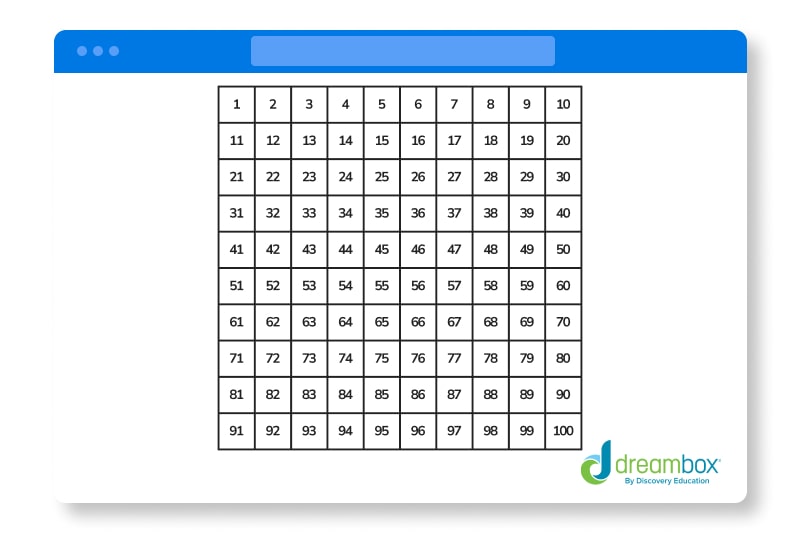
This flexible, low-prep game is a great way for kids to practice solving addition problems. Working in pairs, each student takes turns rolling one die and recording the equation on a chart. In the example below, the student rolled a 3, so they would color three squares and record 0+3=3. On their second roll, they rolled a 6, so they would color 6 more squares and record 3+6=9. Encourage students to help each other with tricky problems.
Estimation Jars
Fill a large mason jar with tiny objects, such as jelly beans, LEGO bricks, or colorful beads. Students secretly write their estimates on a piece of paper, and the class counts the items as a group. The student (or students) who correctly guess the number of objects in the jar wins a small prize.
Fraction Line Up
This game is easily adapted depending on the fractions you’re studying in class. Give each student an index card with a fraction on it. Without talking, students line up in order from smallest to largest fraction, using gestures to communicate. This game helps develop number sense and teamwork.
Dreambox Math Challenges
Turn screentime into an education tool. Online math activities give students a fun, engaging way to practice important skills and concepts. Reinforce their learning with Dreambox Math, an online program that provides personalized instruction for all learners. Each student in your class can work at their own pace, and the consistent assessments help educators understand exactly where they are.
Take at home math practice to the next level
Empowering parents and educators to make math practice more impactful. Plus, your kids will love it.