

10 5th Grade Volume Problems

Practice calculating volume with real-world problems, visuals, and formulas to build strong 5th-grade math skills.

headshot of katie wickliff

Author

Katie Wickliff

Published:

June 2026

Key takeaways

If you’ve ever heard the question “But when am I ever going to use this in real life?” then you know that students want math to feel meaningful and relevant to their real-world experiences. Luckily, calculating volume is easily connected to the real world. Filling a swimming pool, measuring ingredients in the kitchen, or packing a suitcase all require an understanding of volume to figure out how much space something occupies. In 5th grade, students focus primarily on calculating the volume of a rectangular prism. This guide covers how to find volume using both unit cubes and the standard formula, and includes 10 practice problems to help your 5th grader sharpen their skills.

Understanding Volume

Volume is the measurement of how much space is inside a three-dimensional (3D) object. Before learning about volume, students first study area, which measures the number of square units covering a flat, two-dimensional (2D) shape. When students understand this concept, they can think of volume as taking that flat surface and stacking it to fill up a 3D space. 

Volume of a Rectangular Prism

Counting unit cubes is a great introduction to calculating the volume of rectangular prisms. By looking at a figure filled with unit cubes, students will have an easier time visualizing and understanding what volume means before using formulas.

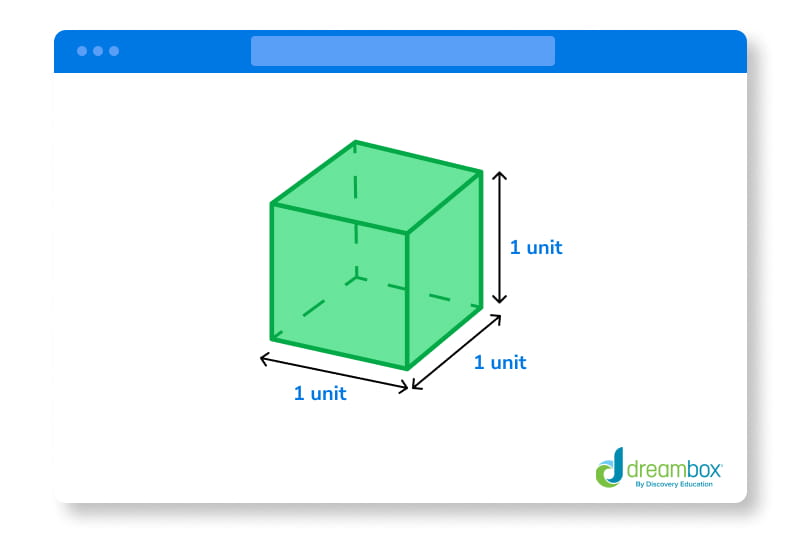
volume problems

A unit cube has a volume of 1 cubic unit 

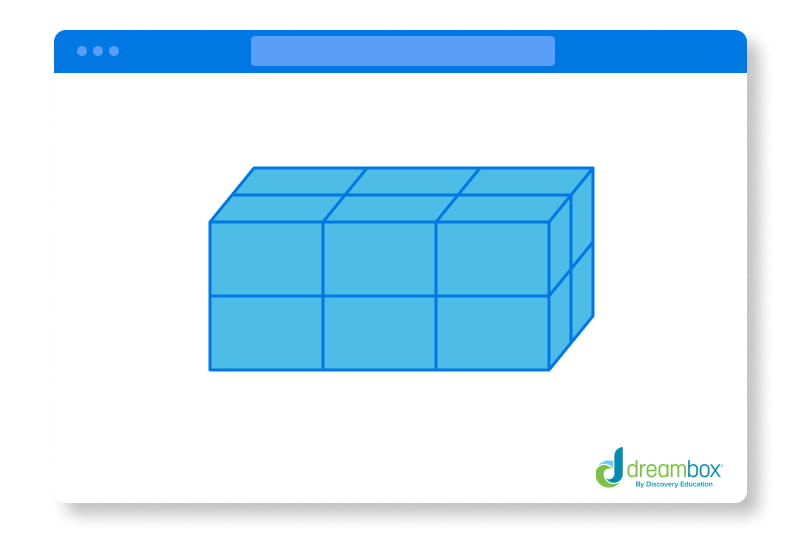
In the following example, the volume of the rectangular prism is 12 cubic units. Students can count the number of layers, count the number in each layer, and multiply the two numbers together

volume problems

Number of layers: 2

Number in each layer: 6

Volume: 12

Then, students can learn the formula to find the volume of a rectangular prism. To calculate the volume of a rectangular prism, we need three measurements: the length (l), the width (w), and the height (h).

To find the volume of a rectangular prism, we use this formula:

Volume=length x width x height

volume problems

V= 3 x 2 x 2

V= 12 ft

Get more math practice with DreamBox!

Turn math into playtime with DreamBox Math

DREAMBOX MATH

Get started for FREE today!

in-app DreamBox Math screens

10 5th Grade Volume Problems

These practice problems will help your 5th grader strengthen their understanding of volume. If you’re looking for additional practice, Dreambox Math is a great resource. This online math program provides personalized learning support or an extra challenge for learners who are ready to take the next step.

1. Which of these figures has volume? Choose all that apply

  • A. A
  • B. B and C
  • C. Both C and D
  • D. None
Answer
  • B. (3D cube and 3D cylinder)

2. Which describes a situation where you can measure volume?

  • A. Amount of floor space
  • B. Water in a fish tank
  • C. Average student height
  • D. Coffee in a mug
Answer
  • B and D

3. Do shoeboxes have volume? Why?

Answer
  • Yes, because they have length, width, and height

4. Crate problem (4×3×3)

Answer
  • A. 36 cubic feet
  • B. 27 cubic feet
  • C. Yes, both stacks fit

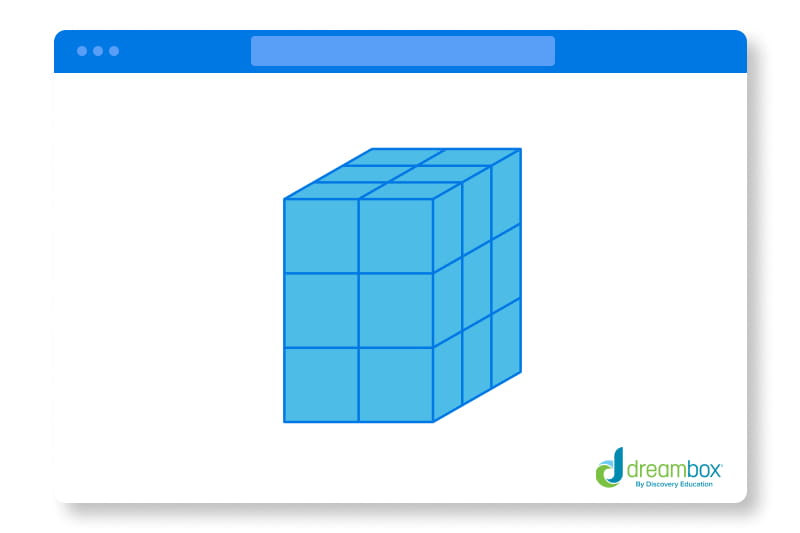
5. Is Jaxson correct?
Answer
  • No. The correct volume is 24 cubic units

6. Which expressions find the volume?
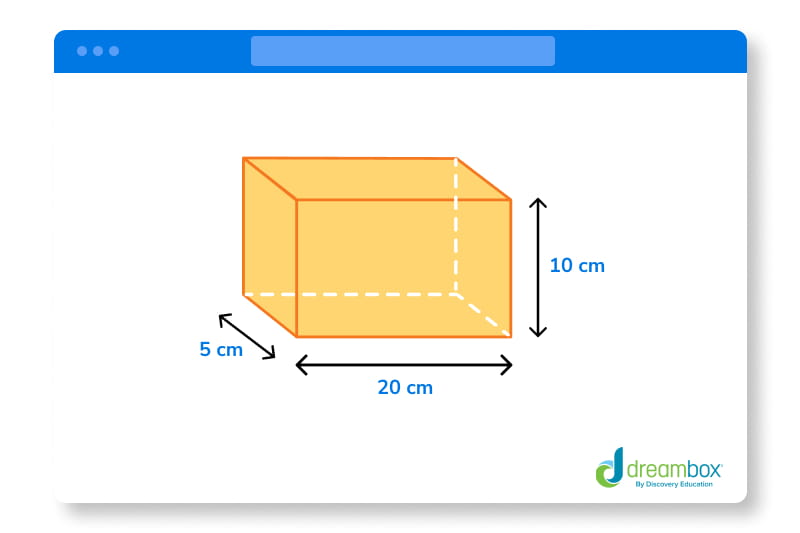
  • A. 20 + 5 + 10
  • B. 25 × 10
  • C. 20 × 5 × 10
  • D. 20 × 50
Answer
  • C and D

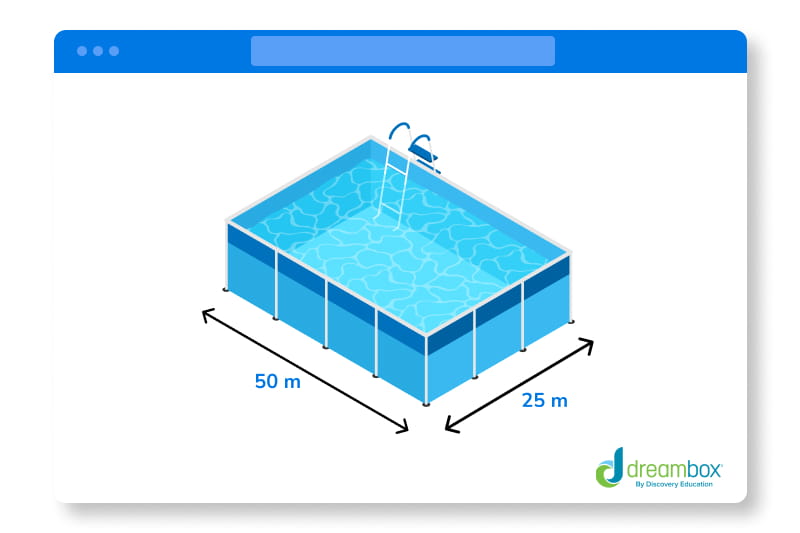
7. Find the volume of the pool
Answer
  • V = 50 × 25 × 4
  • V = 5,000 cubic meters

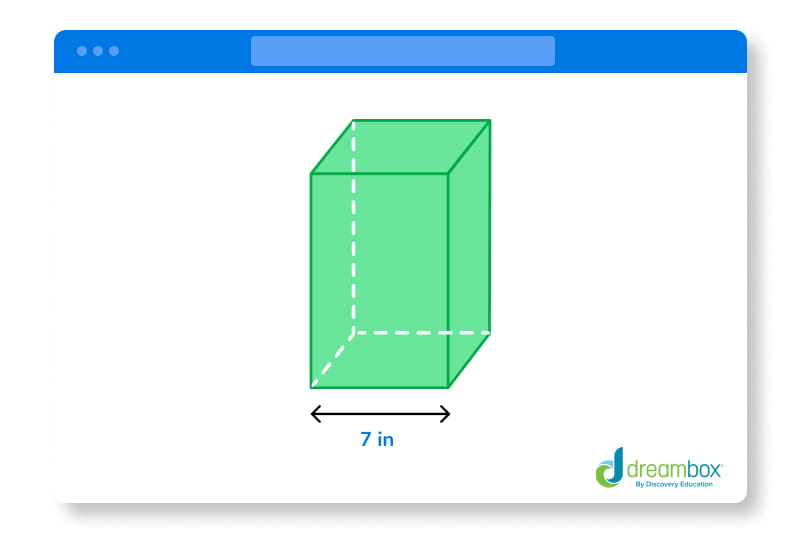
8. Does Shima need more information?
Answer
  • Yes, the height and width are missing

9. Toy box height?

  • A. 18 units
  • B. 4 units
  • C. 8 units
  • D. Not enough info
Answer
  • B. 4 units

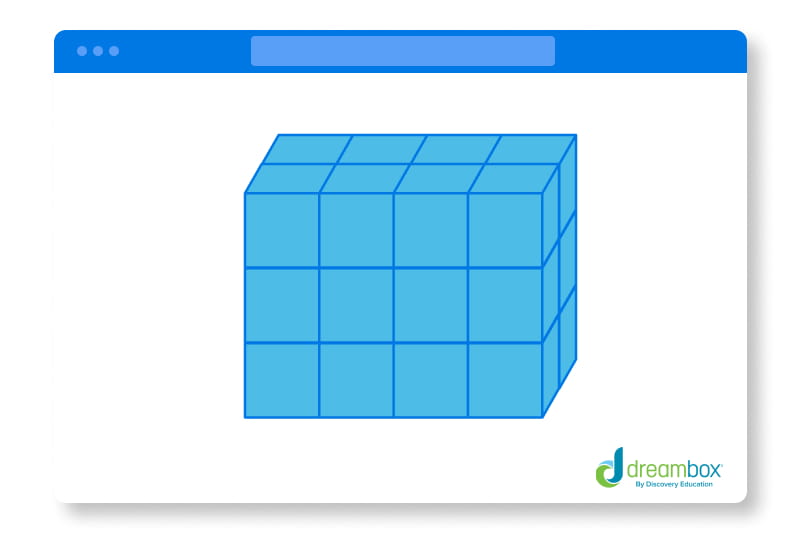
10. Label dimensions and find volume
Answer
  • l = 4
  • w = 2
  • h = 3
  • V = 24 cubic units

Take at home math practice to the next level

Empowering parents and educators to make math practice more impactful. Plus, your kids will love it.